The subject leader for Maths is Mrs Ray, a Primary Mastery Specialist who works with the Venn Maths hub to develop maths at our school and to support other schools in Essex.
At the heart of everything we do, is a belief that all children can achieve and master mathematics. Mistakes and misconceptions are seen as an essential part of learning and fostering positive can-do attitudes promotes the fact that, ‘We can all do maths!’
At Galleywood Infant School we have strong links with The Venn Maths Hub. Our curriculum is research based and informed by research conducted by the National Centre for Excellence in the Teaching of Mathematics (NCETM).
The teaching of Mathematics is built upon the National Curriculum. Our curriculum follows the five big ideas of teaching for mastery outlined by the NCETM. Big Ideas in Teaching for Mastery | NCETM
The National Curriculum is delivered using the NCETM’s Curriculum guidance and teachers use NCETM resources to plan and deliver lessons.
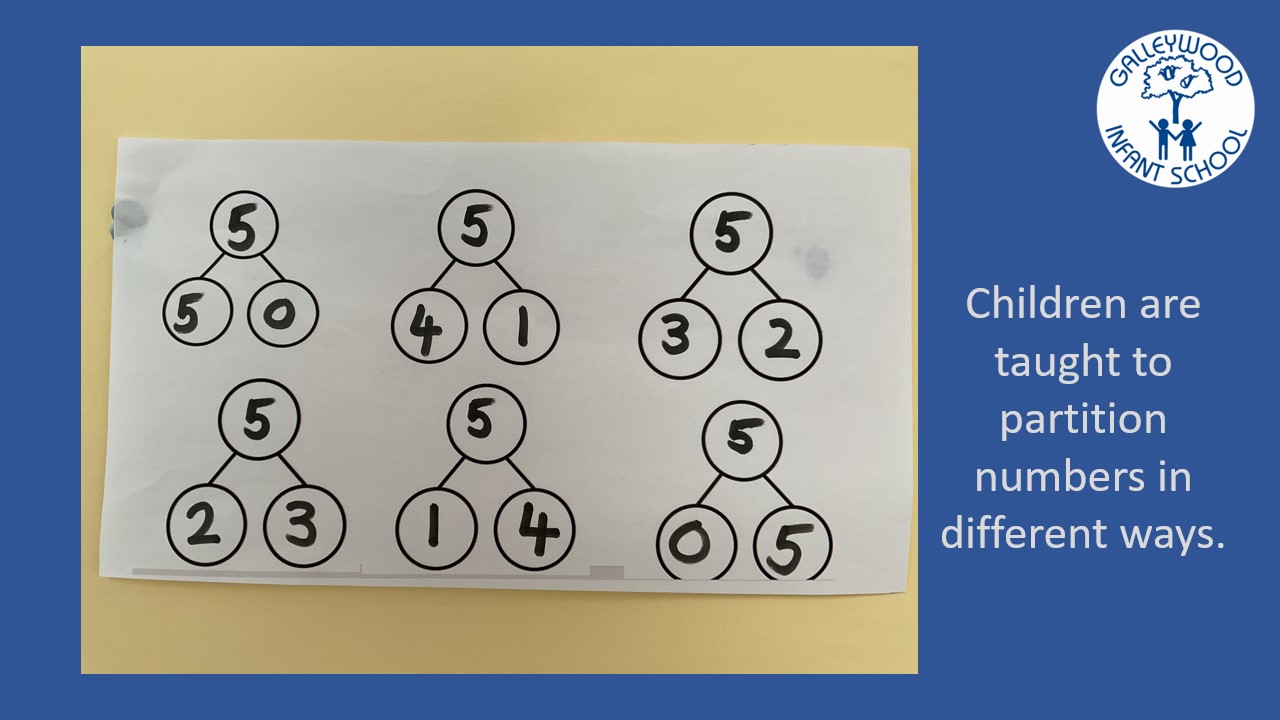
Maths lessons are supplemented by the delivery of additional Mastering Number sessions to support children’s factual fluency. In Key Stage 1 Mastering Number focuses on additive facts and relationships. In these sessions children have the opportunity to practice and develop their maths skills. One aspect of fluency is being able to learn facts by heart, which underpins success in mathematics. For this reason, we support the learning of facts through the Mastering Number sessions. The emphasis is on calculating not counting through short, carefully constructed sessions, which explicitly practise the strategies to aid the recall of facts.
Children are encouraged to develop their fluency skills through a variety of whole class activities and games. We welcome the support that parents/carers are able to give in helping children to learn number facts, such as pairs of numbers which make ten, or times tables, which underpin many aspects of the maths curriculum.
Success in Mathematics is a vital life skill. Our curriculum aims to provide stimulating and engaging lessons which support all learners to be competent and confident mathematicians.
At Galleywood Infant School we teach daily Mathematics lessons that follow a ‘small steps’ approach and are taught as discrete units of work. This is done purposefully so that the right topics are introduced at the right time and build upon previous learning. Teaching builds on the knowledge acquired previously both from prior years and within the year. Opportunities are given to revisit and consolidate so that the majority of children are able to stay together on their learning journey.
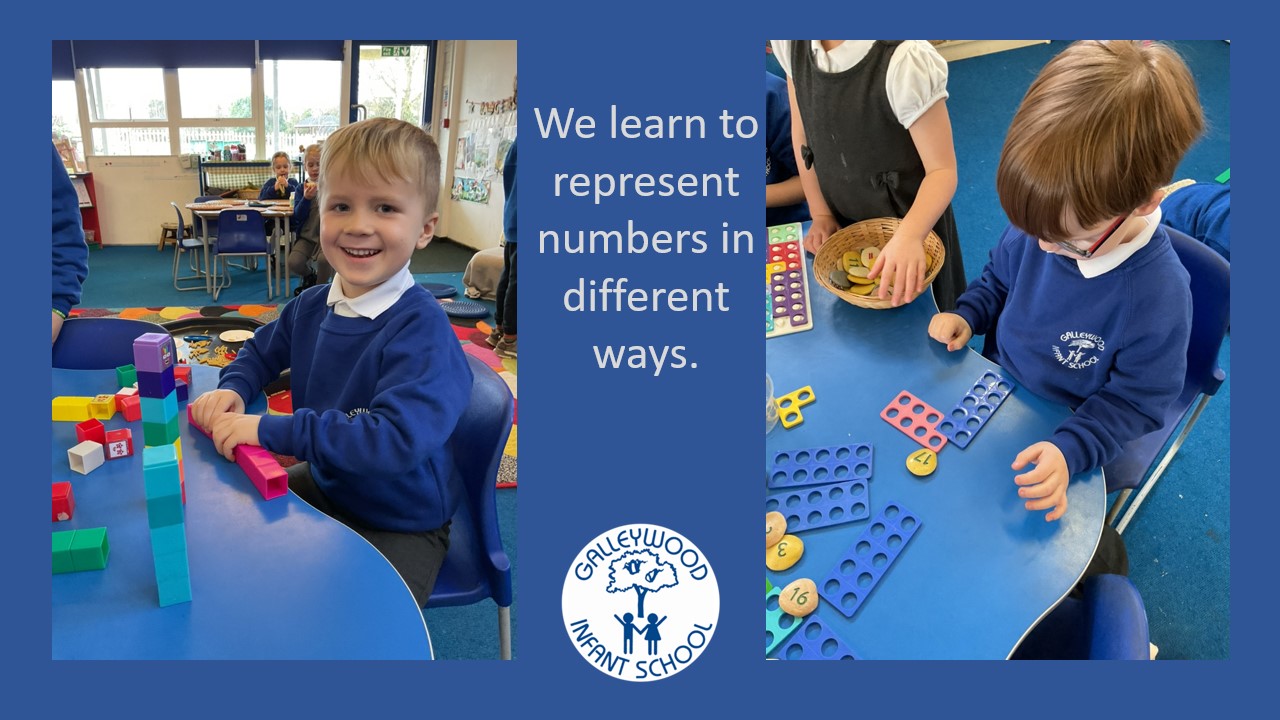
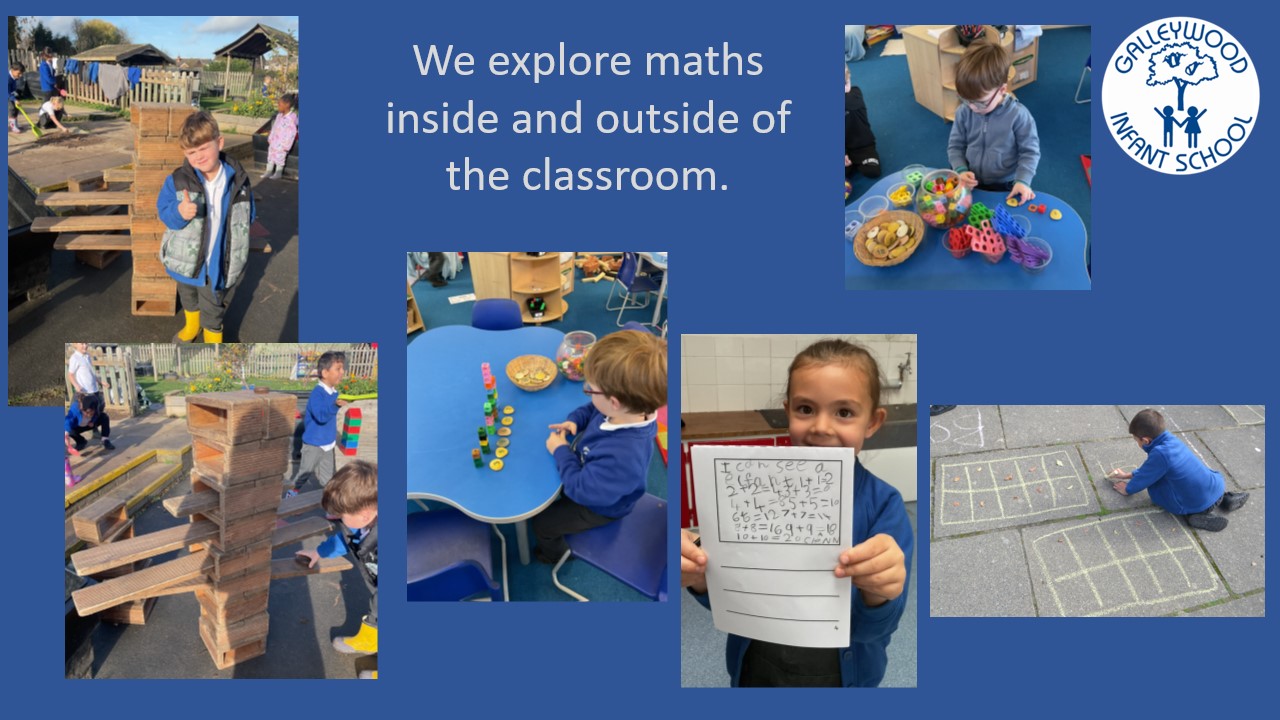
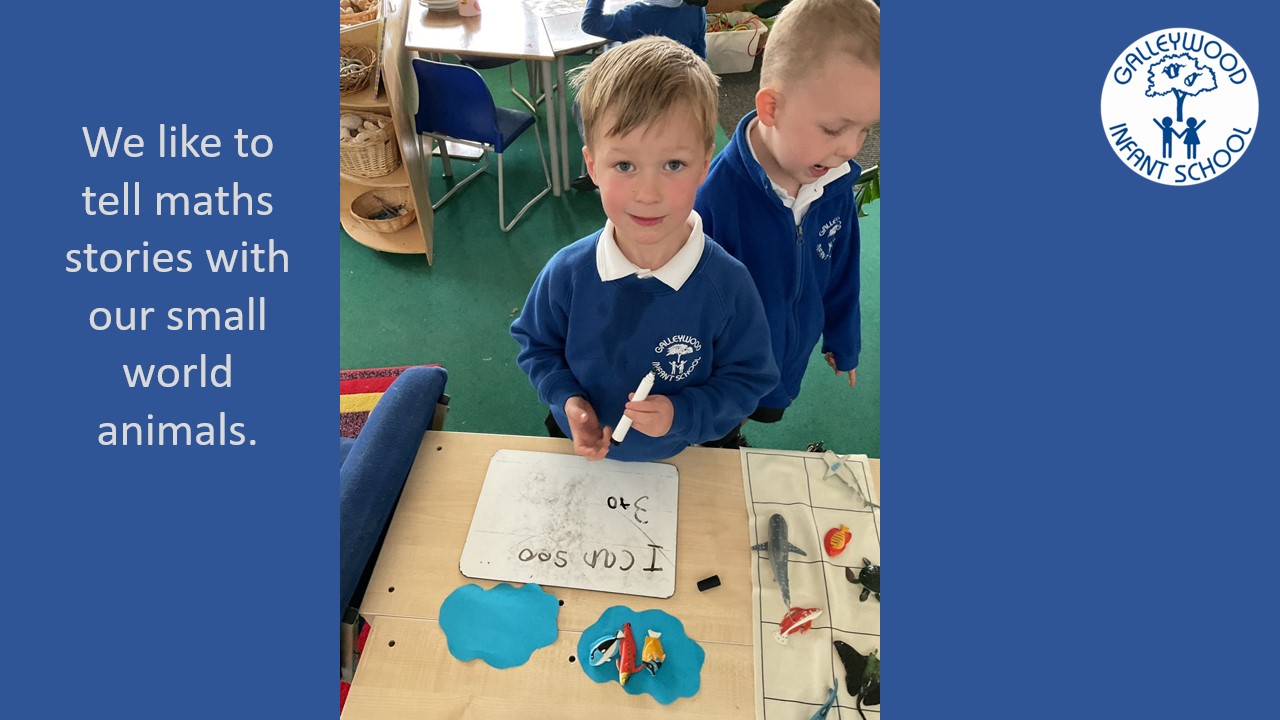
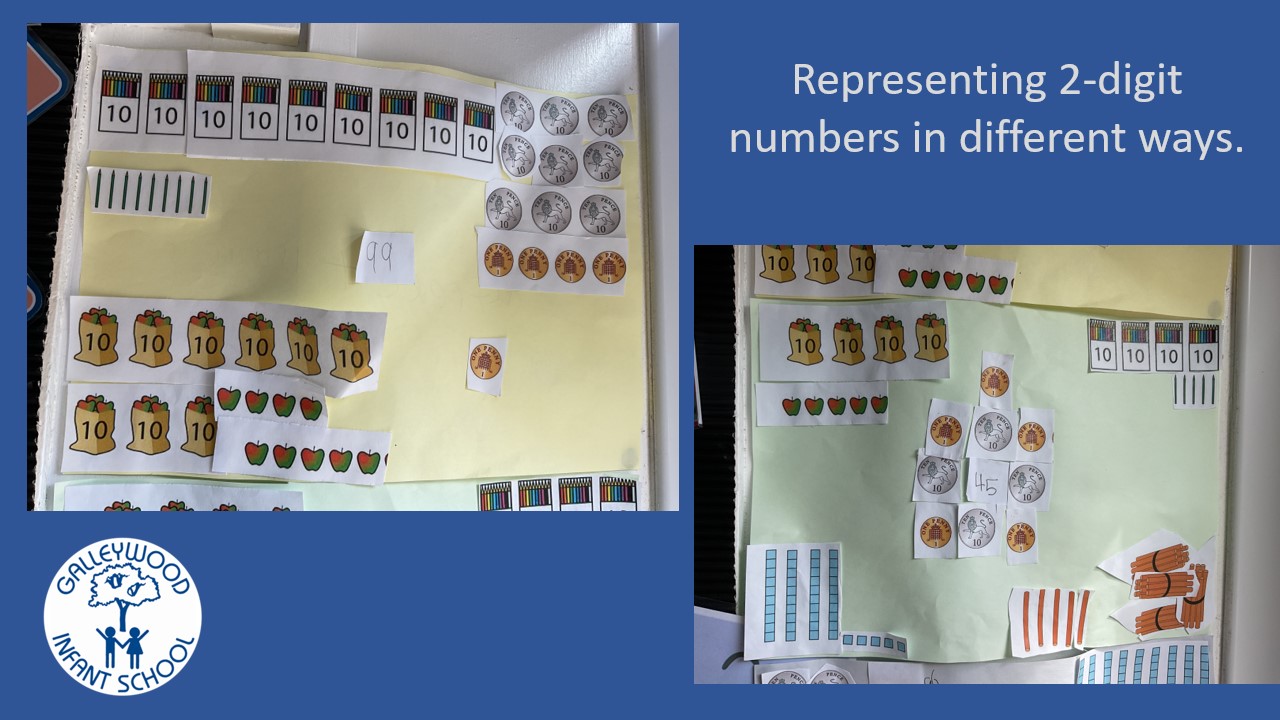
We aim to provide learners with deep conceptual understanding of mathematical structures, the ability to communicate effectively using precise mathematical vocabulary whilst becoming mathematical thinkers. This is supported with the use of concrete resources and visual images to support learning for all.
Mastery Through Small Steps
The way in which Maths is taught at Galleywood Infant School is by its nature inclusive. Teachers have high expectations for every learner, with challenge for all in our lessons which are built upon the mastery approach, using small steps and variation to highlight structure, building fluency through intelligent practice and revisiting concepts regularly to ensure that “learning sticks”.
Representation-Rich Classrooms
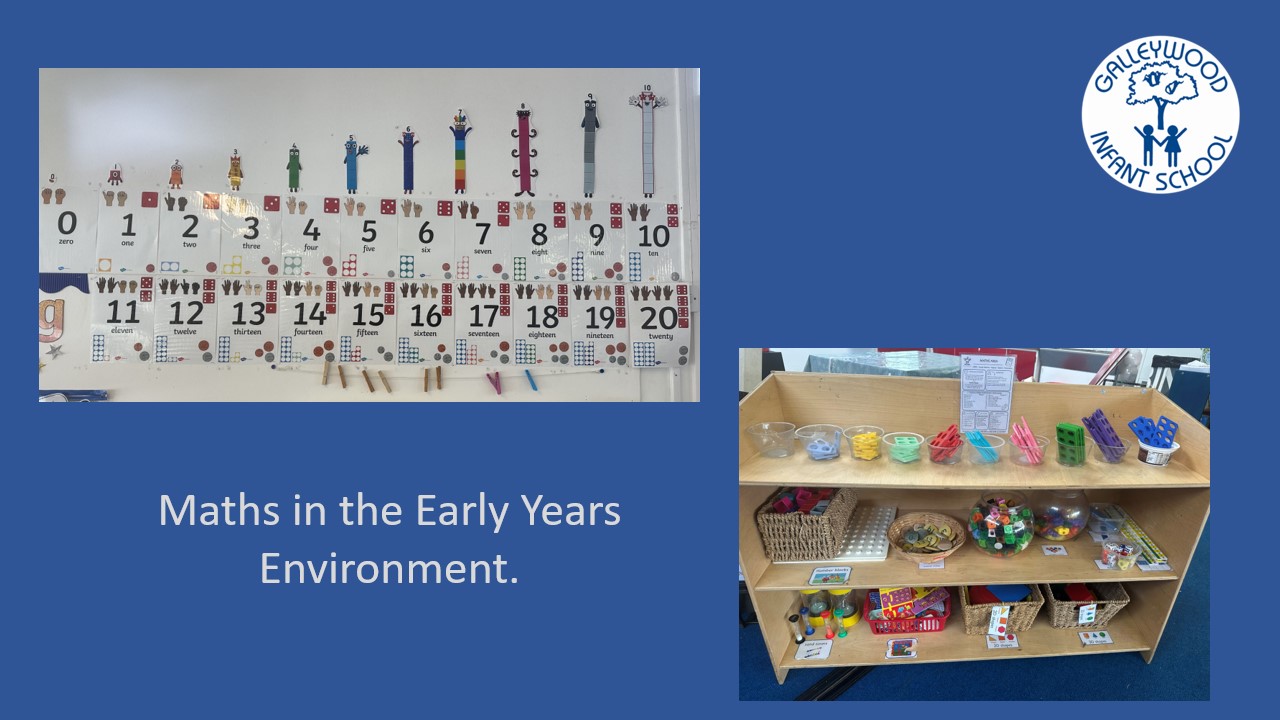
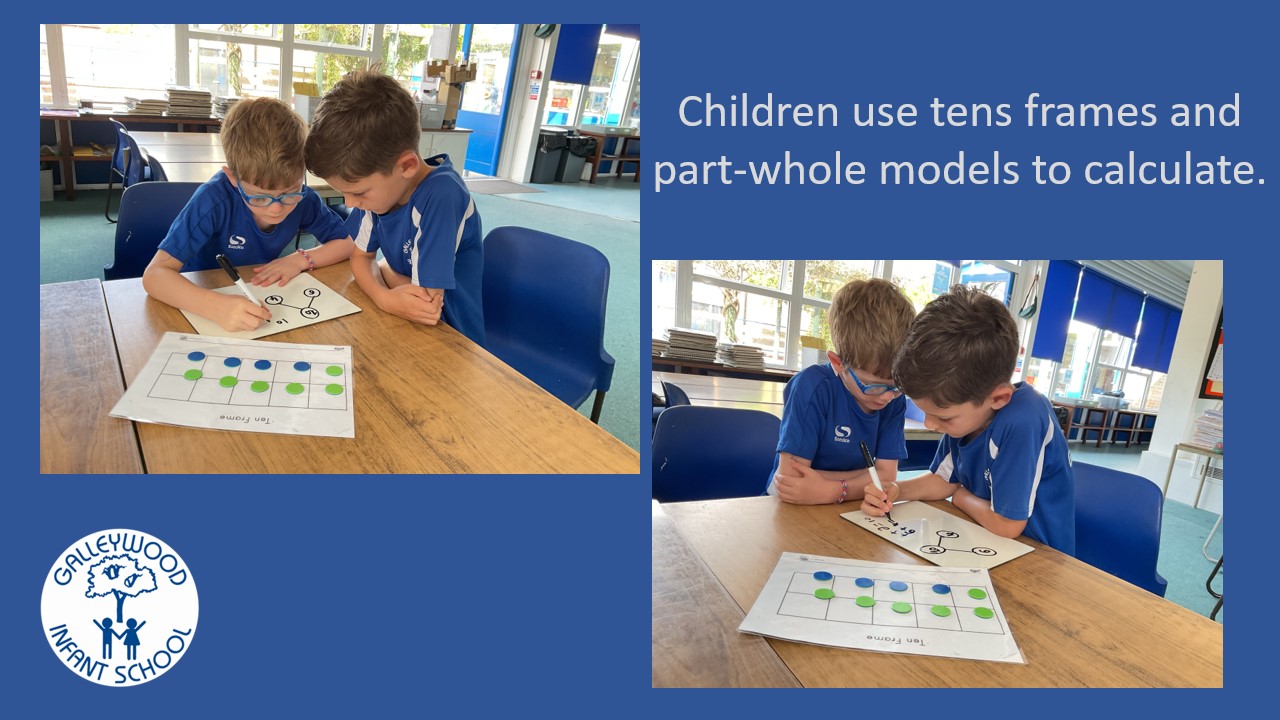
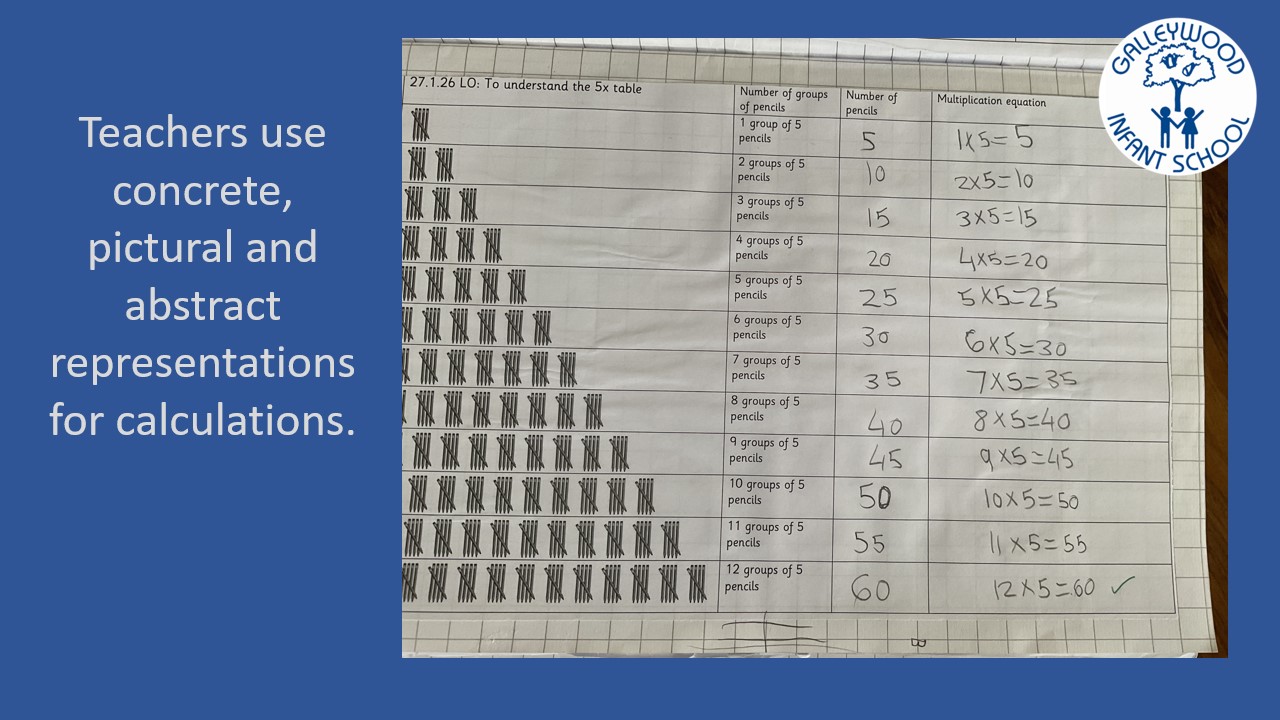
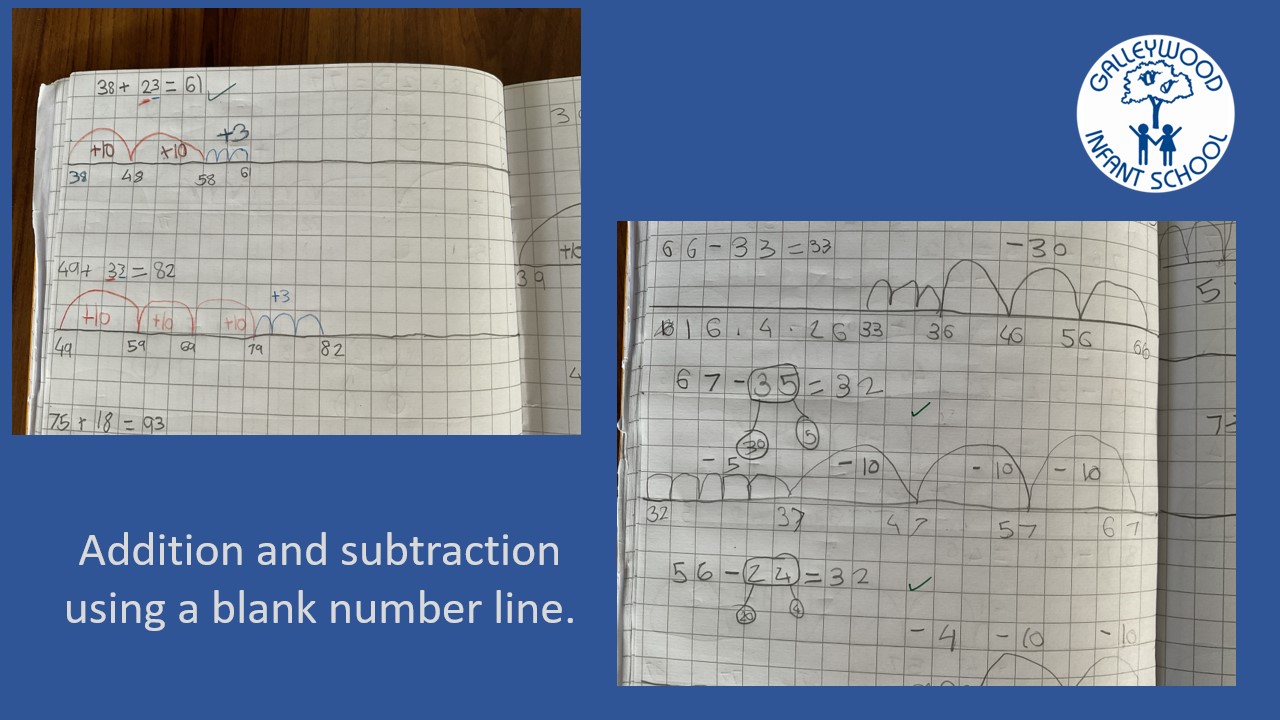
Children are introduced to new topics through a range of images and structures, following the concrete → pictorial → abstract approach. Concrete resources such as number lines, tens frames, bead strings, and place-value counters support deep understanding and are available to all learners.
Children with specific needs are supported to access learning through strategies such as visual prompts, chunked tasks, concrete resources, or coloured paper. Independent work is always encouraged, and children are supported to achieve this through tasks that are appropriately matched to their stage of learning. Where needed, children may have additional short sessions for extra practice of key concepts to enable all children to keep up rather than catch up.
Guided Practice within lessons allows children to rehearse new learning through a short task or practical activity, giving the teacher a quick insight into their understanding. Where support is needed, the teacher may adapt the task or provide additional scaffolding, such as concrete apparatus or alternative pictorial representations.
Oracy
Vocabulary used in the lesson is rehearsed and modelled through stem sentences to support mathematical thinking, alongside partner talk and opportunities to explain, justify and question.
Belonging, Safety, and Positive Mindset
Children learn best when they feel safe to make mistakes, and our school ethos reinforces this by normalising errors as a natural and valuable part of learning. Mistakes help us learn, and everyone’s ideas matter. We celebrate perseverance and make it clear that all children are working towards understanding, with errors recognised as part of the process.
This approach builds confidence. Children begin to use language like “I can’t do it yet” because they see progress as achievable and ongoing.
We foster a culture where children are willing to take risks in their learning. They share ideas, ask questions, and attempt challenging tasks within a supportive environment. This sense of belonging and safety enables ambition for all.
Assessing children’s progress is vital in order to establish their acquisition of knowledge and skills. At Galleywood Infant School learning always starts with the children’s prior knowledge and any misconceptions they may have. Misconceptions that arise throughout a unit are identified and addressed appropriately, using mistakes as learning points. Regular informal assessments enable teachers to assess understanding of the maths covered in that unit and this informs next steps.
In Early Years, assessment happens continually to collect consistent and varied evidence of mastery. This then feeds into the continuous cycle of Observation, Assessment and Planning.
In Key Stage 1, children are informally assessed day to day by the class teacher with rapid support and intervention in place to support children who need it. End of unit assessments are conducted by the class teacher to identify gaps in learning and misconceptions. Teachers then plan for additional learning opportunities to address these needs.
There are many ways you can support maths at home, but the first step is to talk positively about Maths and model a positive attitude towards maths.
Use everyday opportunities
Maths can be built into daily life through:
- Cooking together – measuring ingredients, doubling or halving recipes, timing.
- Shopping – comparing prices, spotting numbers, estimating totals, counting coins.
- Time talk – reading clocks, working out durations, planning routines.
- Household maths – sorting laundry by size/colour, counting steps, measuring furniture.
- Weather and calendars – reading temperatures, comparing days, spotting patterns.
Play Games to Strengthen Number Sense
Games are one of the best ways to practise maths without it feeling like work but build fluency, reasoning and strategic thinking.
- Board games: Snakes & Ladders, Ludo, Monopoly Junior, Connect 4.
- Card games: pairs, number bonds snap, “higher or lower”.
- Dice games: roll two dice and add/subtract/multiply; race to 100.
- Puzzles: jigsaws, tangrams, Sudoku for kids, pattern blocks.
Online games and apps
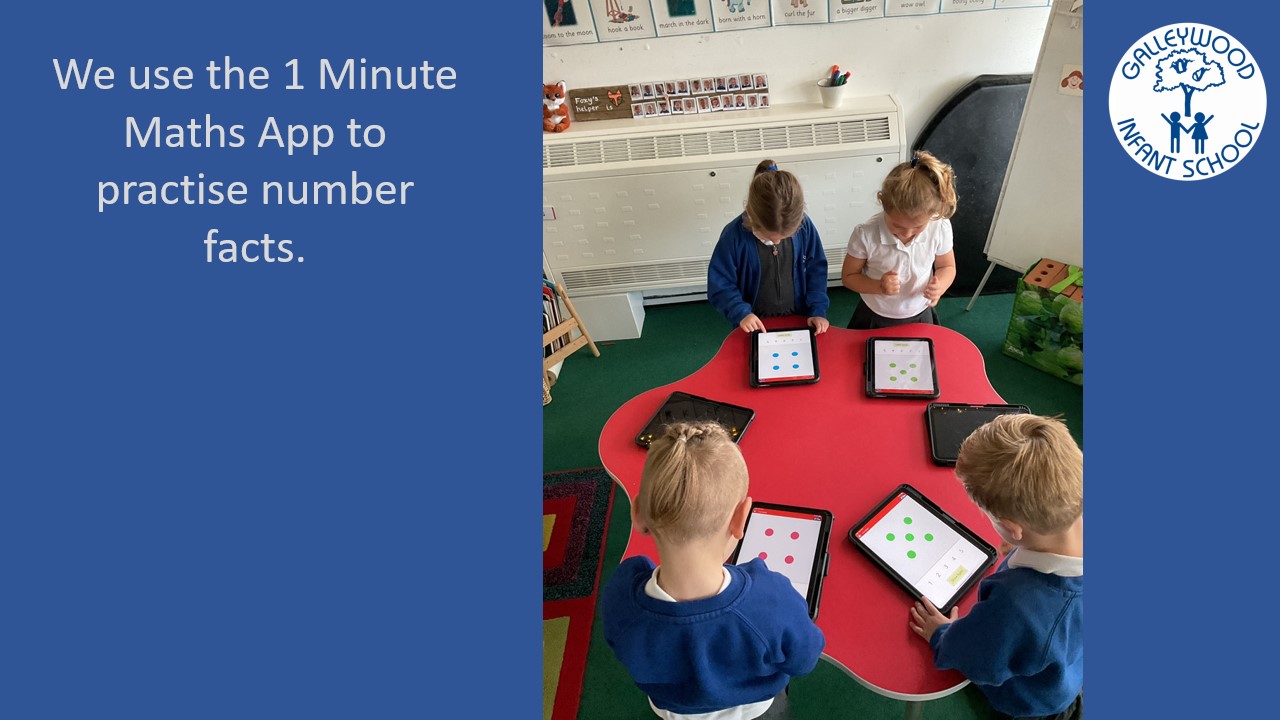
We would recommend the app 1-Minutes Maths developed by White Rose Education. Designed for use both in class and at home, the 1-minute maths app helps children build greater number confidence and fluency. The app is designed to target practice in engaging, one-minute chunks! Individual one-minute tasks focus on adding and subtracting – and on ‘Subitising’, the skill of instantly recognising the number of items in a group without counting. Multiplication and division topics are also available. Children can choose any topic they want to try. They then answer a unique series of questions (so it’s a different set of questions every time). If they’re struggling with a question, a ‘Hint’ button will give a helpful clue by showing the question in a different but familiar way. When the one minute’s up, they’ll see a feedback screen telling them how they’ve done.